
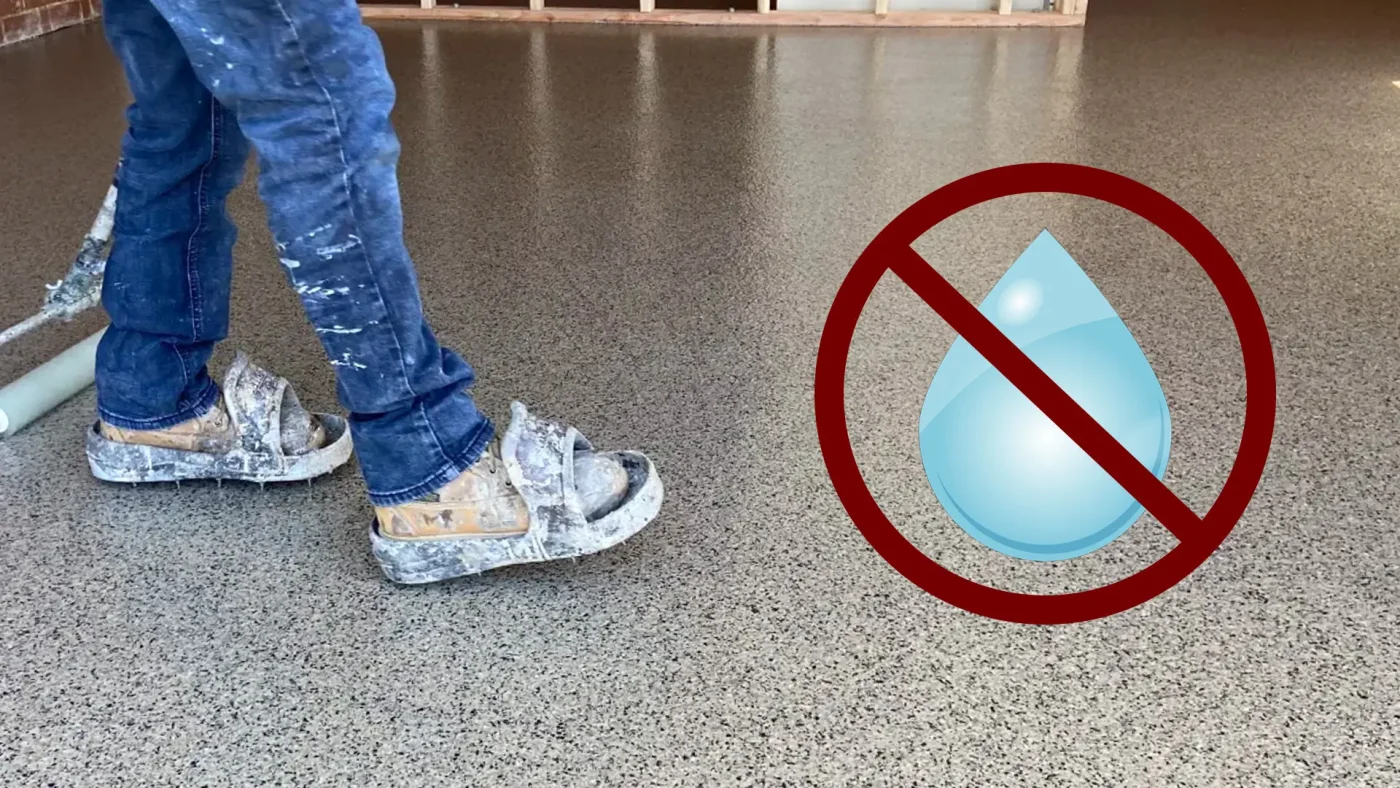
One of the biggest misconceptions about an epoxy floor coating is that all coated floors become slippery when wet. In reality, today’s professionally installed systems can be customized to provide the right balance of traction, durability, and appearance.
The key is understanding what actually creates slip resistance and what doesn’t.
Why Exposed Flake Isn’t the Answer
Many people assume the decorative flake broadcast is what creates traction. While exposed flakes may create a rough texture initially, that isn’t how quality coating systems are designed to perform.
Some 1-day coating systems intentionally leave decorative flakes partially exposed rather than fully encapsulating them beneath protective topcoats. As those flakes wear down, traction can become less consistent, plus the floor can become harder to clean.
A quality garage floor coating should not depend on exposed flakes for long-term performance.
What Actually Creates Traction?
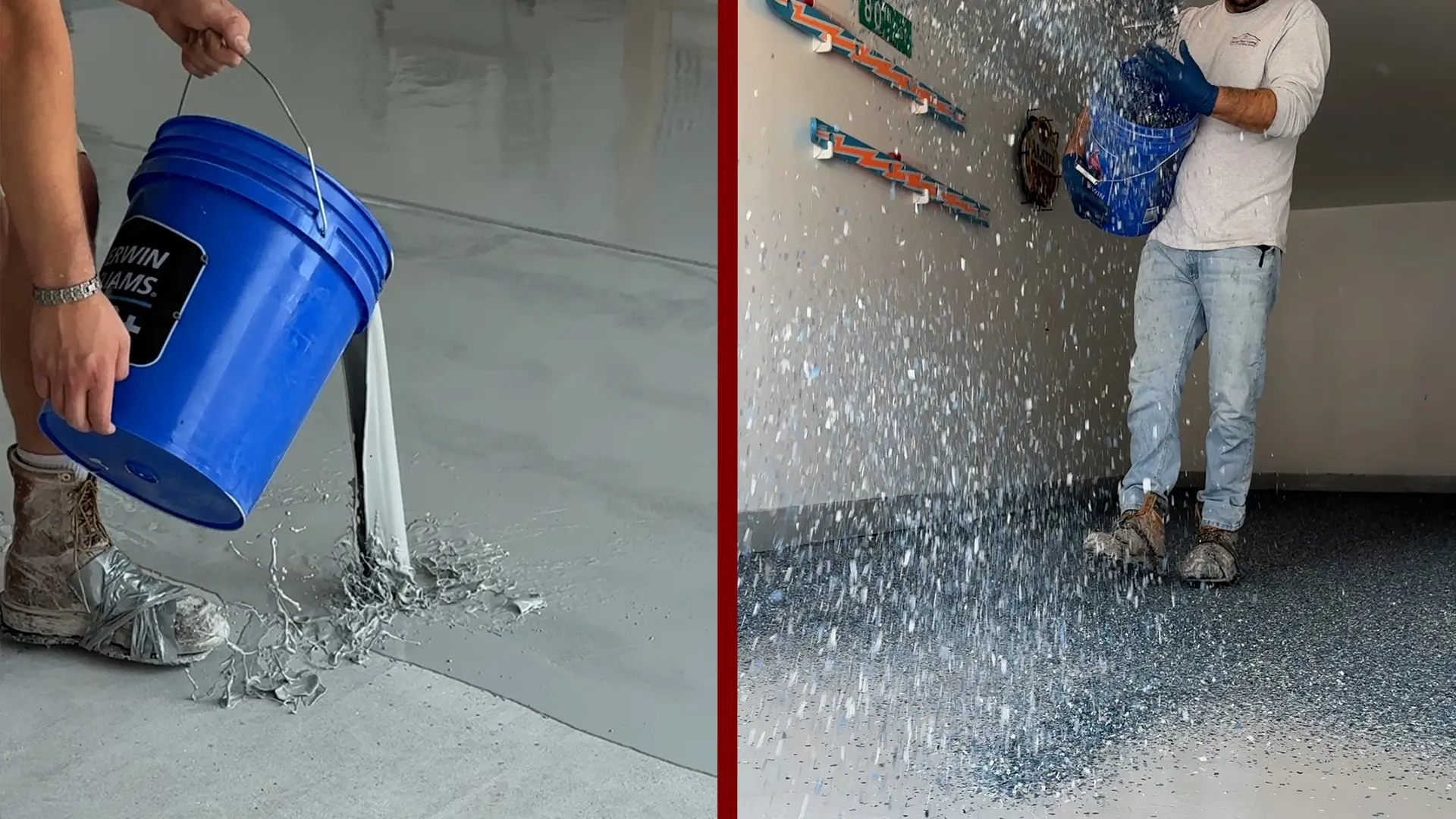
Professional installers create traction by incorporating anti-skid additives directly into the final clear coat. These additives are available in a variety of textures and can be tailored to the homeowner’s preferences.
Common options include:
- Quartz
- Aluminum oxide
- Polypropylene additives
- Silica-based media
Some additives create a subtle texture that’s nearly invisible, while others provide a more aggressive anti-skid profile. The right choice depends on how the garage is used and the level of traction desired.
A proper garage floor epoxy system encapsulates the decorative flakes beneath protective clear topcoats, while the anti-skid media is incorporated into the final coat itself.
Learn More About Epoxy Floor Coating Options
If you’re considering an epoxy floor coating for your garage, Garage Floor Coating of Atlanta can help you select the right texture and finish.
Contact our team today to learn more about how our process is designed for long-term durability, easy maintenance, and dependable traction.
About the Author

Share this Post