
If you’re planning to install a hybrid epoxy and polyaspartic coating system in your Atlanta garage, proper crack repair and concrete preparation are essential. Cracks, surface contamination, and moisture vapor all affect how well a coating bonds and how long it lasts. A floor that fails early is usually the result of shortcuts taken before the epoxy floor coating is ever applied.
Here’s what homeowners should know about preparing a concrete garage floor the right way.
Why Cracks Must Be Addressed Before a Garage Floor Coating Is Installed
There are two types of concrete: concrete that’s cracked, and concrete that’s going to crack. Whether a slab is 30 days old or 30 years old, expansion and contraction are inevitable.
Because concrete moves, cracks should never be filled with rigid materials. Before installing an epoxy floor coating, cracks must be repaired using a flexible elastomeric filler. This allows the repair to move with the slab instead of resisting it, helping mitigate inevitable shifting that can lead to visible crack lines or coating failure later on.
Grinding Is the Right Way to Prepare Concrete
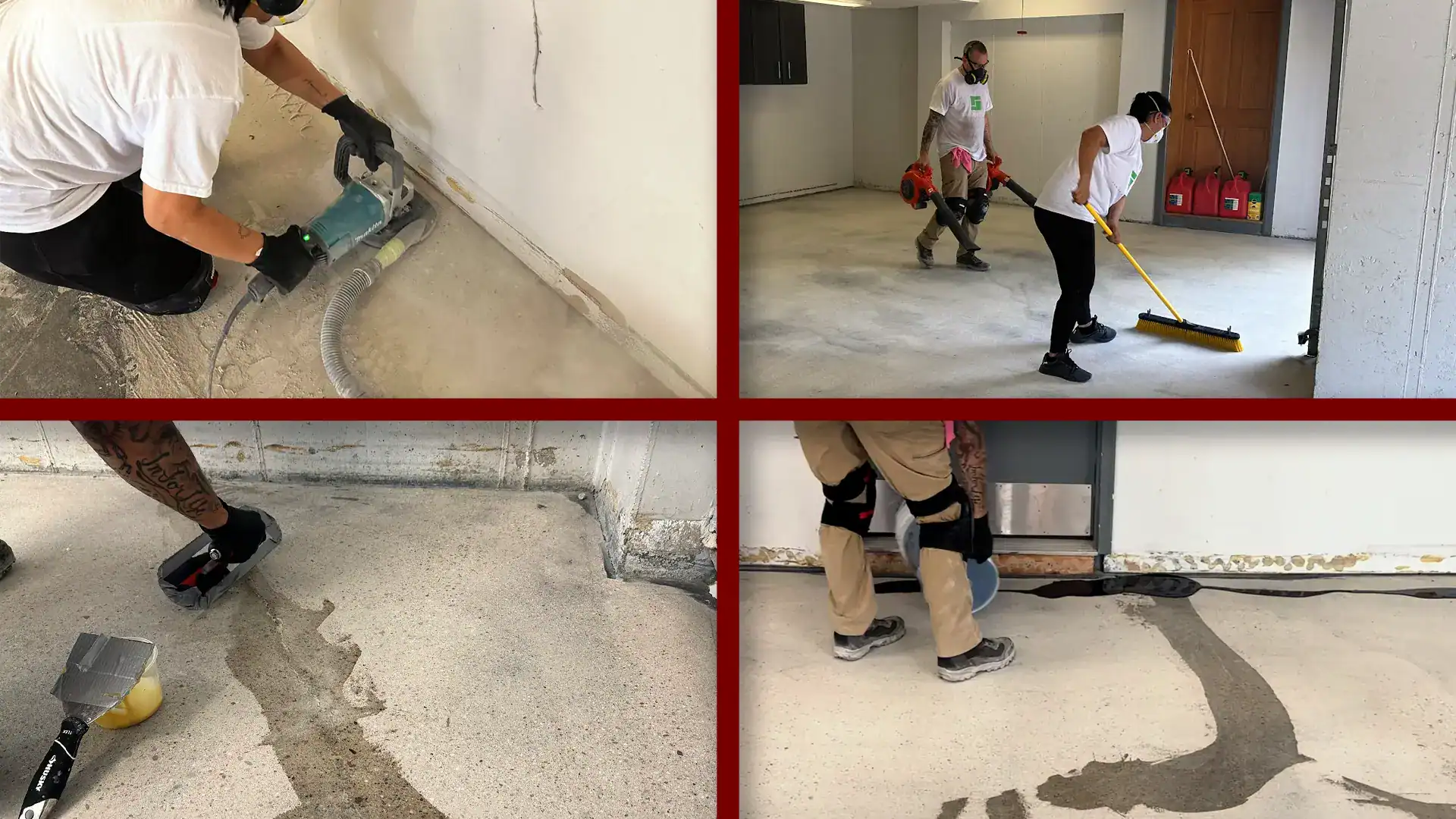
Sweeping and degreasing are not adequate surface preparation. Even acid etching and buffing machines do not create consistent profiles. (At the other end of the spectrum, shot blasting is usually overkill for a residential garage floor).
Professional installers use diamond grinding equipment to open the pores of the concrete so the garage floor coating can bond effectively. Grinding also removes contaminants and exposes any additional surface issues that need to be corrected before coating.
What Is Moisture Mitigation and Why Does It Matter?
All concrete holds moisture. Before initiating application of any coating, installers must test moisture levels using calibrated moisture meters. If moisture readings are elevated (they almost always are), a moisture-mitigating epoxy primer is the best choice as base coat (never a polyurea or polyaspartic; the go-to choice in “1-day” systems). The moisture-mitigating epoxy cures slowly, so it deeply penetrates the concrete and forms a strong bond. This high-build primer acts as a moisture vapor barrier, protecting the entire coating system from future moisture-related issues that can cause blistering and delamination.
Using the slower-curing epoxy primer is one reason high-quality systems often require a 2-day installation…instead of a risky 1-day approach. Moisture mitigation protects the bond below the surface, where most coating failures begin.
Ready for an Epoxy Floor Coating Done Right?
If you’re considering an epoxy floor coating for your Atlanta garage, make sure crack repair and concrete preparation are handled correctly from the start. Garage Floor Coating of Atlanta specializes in professional surface prep, flexible crack repair, and moisture-mitigating systems designed for long-term performance.
Contact Garage Floor Coating of Atlanta today to schedule a consultation and learn what a properly prepared epoxy floor coating should deliver for years to come.
About the Author

Share this Post